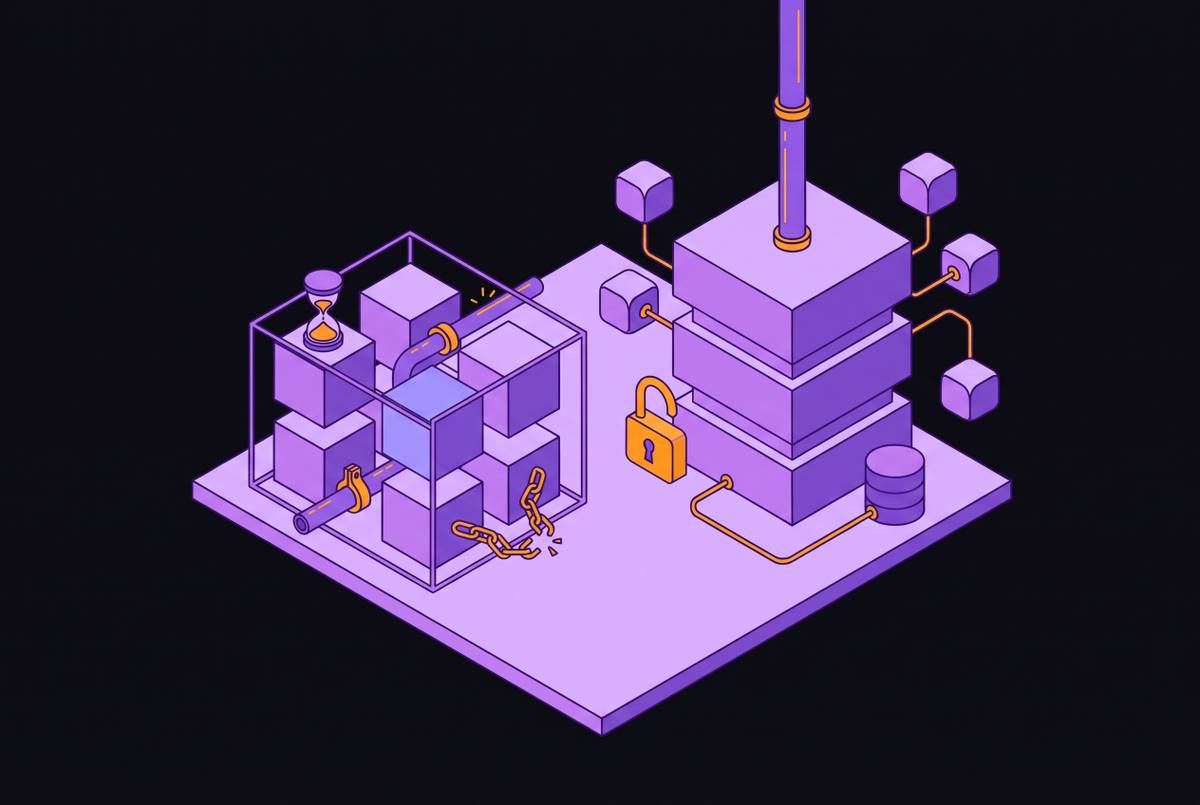
CLI-Driven Deployment Workflows for Self-Hosted Agent Frameworks
Preserve agent state and isolation across deployments with infrastructure-aware CLI commands.
Persistent AI agent infrastructure differs from serverless functions in how it preserves memory, task progress, and execution boundaries across sessions. A serverless deployment is insufficient when it treats each invocation as disposable but the agent needs continuity. CLI-driven deployment workflows for self-hosted agent frameworks close that gap by making persistence, isolation, sleep and wake behavior, and automation part of the deployment contract.
Why "getting it working locally" is not the same as deploying an agent
A developer types the deploy command, the agent starts, and its earlier context is gone. The reasoning loop still works. What failed was the convention connecting that loop to storage that survives replacement of the running process. The same gap appears when credentials that were safely separate on a developer’s machine enter a shared execution environment, or when environment setup cannot be reproduced on the server.
These failures depend on which commands ran, in what order, with which flags, and whether another deployment can repeat those choices. The CLI is the first place those assumptions can become explicit, inspectable configuration. Self-hosting addresses vendor lock-in, compliance requirements, and cost control at scale only when this deployment surface is clean and auditable. Otherwise, control over infrastructure comes with a growing dependence on whoever remembers how it was configured.
What a CLI workflow actually does in a self-hosted agent stack
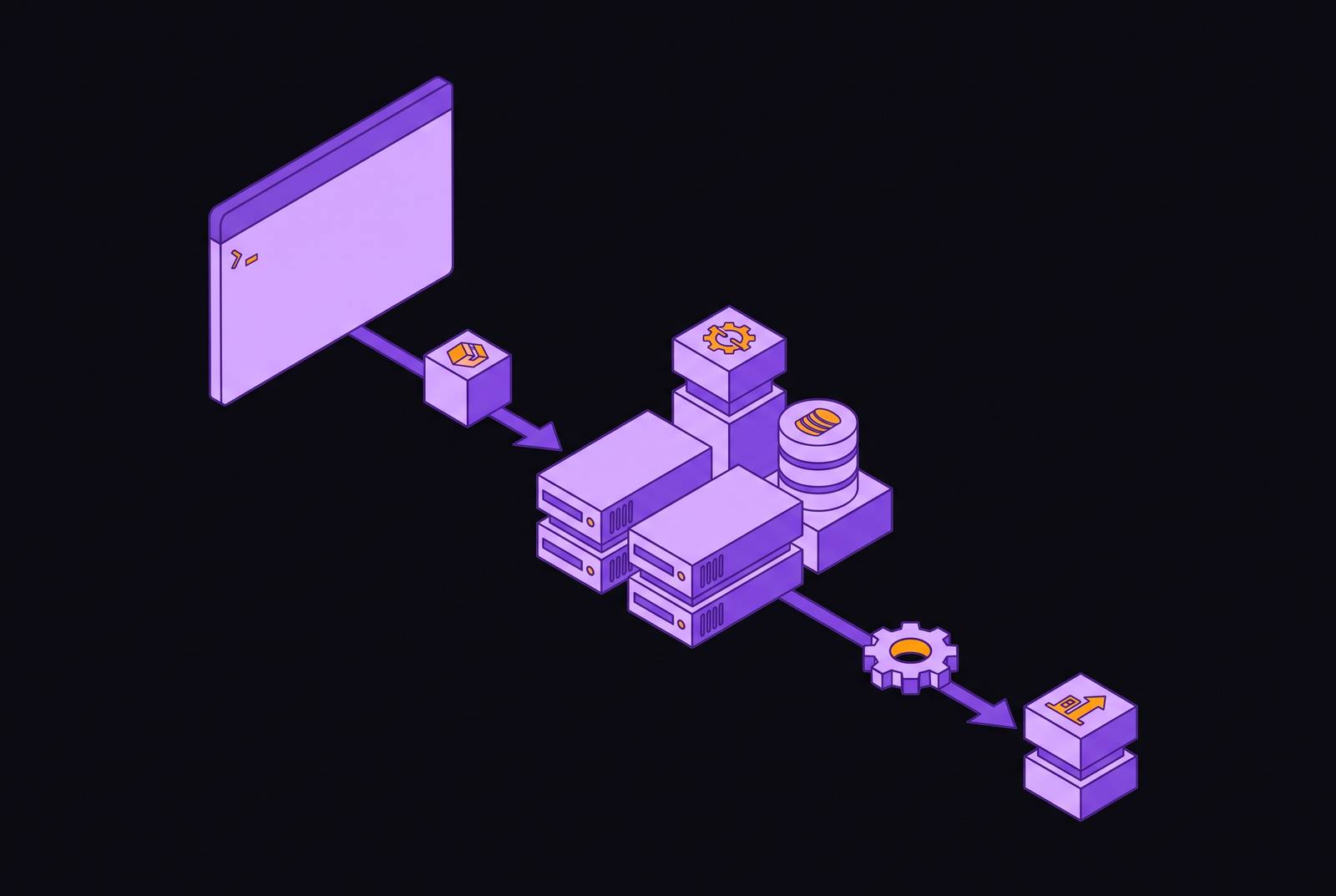
A self-hosted agent stack has three distinct layers. The framework handles the reasoning loop, the CLI and SDK connect deployment and tool exposure, and the compute infrastructure isolates execution. The CLI joins these layers into an operating service. Its role extends beyond starting a process to scaffolding a reproducible project, wiring environment variables and secrets, exposing a service endpoint, and registering the agent with the host’s tool protocol.
That registration determines what other systems can use. MCP defines capabilities on the server and lets clients discover them at runtime, so initialization and registration commands shape what downstream clients see without changes to client code. A deployment workflow therefore governs both where an agent runs and how its tools become available. Commands, flags, and configuration files either record the CLI’s deployment contract in a repeatable form or leave each redeploy dependent on tribal knowledge.
How leading open-source frameworks expose their CLI surface
The open-source landscape in 2026 exposes several different CLI philosophies. mcp-agent provides uvx mcp-agent, scaffolds projects with uvx mcp-agent init, and deploys them with uvx mcp-agent deploy my-agent. Its minimal surface follows the MCP server lifecycle. Google ADK separates execution through adk run, service exposure through adk api_server, and browser debugging through adk web, which launches the ADK Dev UI. Its built-in session management and server commands spare developers from writing server boilerplate, and it can deploy to Cloud Run, Vertex AI Agent Engine, and GKE.
Goose, an Apache 2.0 runtime written in Rust, offers a native desktop app, a full CLI, and an embeddable API, with entirely on-machine execution requiring no cloud instance. Block donated Goose to the Agentic AI Foundation at the Linux Foundation on April 7, 2026. OpenHands emphasizes orchestration through a permissively licensed autonomous agent platform and visual Agent Canvas, with self-hosted, VPC, and air-gapped patterns. Aider instead makes the terminal and local repository its operating surface, committing AI edits as reviewable git commits. These are distinct workflow boundaries with different deployment guarantees.
The scaffolding commands that determine long-term project structure
The init command establishes conventions that later commands inherit. Directory layout, configuration format, and secret handling can either separate agent logic from infrastructure or entangle them before the first deployment. Consider a scaffold that places a credential directly in agent code. Moving it to another environment then requires changing the application to configure deployment. A scaffold that reads the credential from an explicit environment variable keeps that difference outside the reasoning loop.
The same distinction applies to tool registration. If initialization places the MCP capability list in a configuration file that deployment reads, adding a tool can be a one-line configuration change. If registration is hardcoded into the agent loop, each addition touches deployment logic. This also matters to regulated teams, which need to track which tools are available, which credentials are held, and what changed between deployments. Inspectable configuration makes that review tractable, while a project structure consumable by CI/CD avoids manual surgery before the second machine or environment.
Persistent state and why the deploy command cannot be stateless
The agent that loses context on its first redeploy exposes a mismatch between application design and deployment policy. Memory Management retains knowledge across sessions, while a planning-and-execution pattern preserves task progress across steps. Both require storage that outlives the running process. Persistent memory can reside in distributed databases, knowledge graphs, or vector stores, but the deploy command still needs connection details and a defined handoff from the previous instance.
If an agent relies on process-local context that deployment discards, starting its code again does not resume its work. Snapshot-restore addresses initialization continuity by capturing a ready microVM’s memory and block device state, then restoring from that snapshot. Durable execution platforms such as Temporal, Hatchet, and DBOS address suspend and resume for workflows waiting on human input. These are related but distinct responsibilities. A deployment contract needs a persistence backend, snapshot policy, and resume behavior so that durable knowledge, execution state, and initialization are not treated as the same thing.
Isolation at deploy time: why each agent needs its own execution boundary
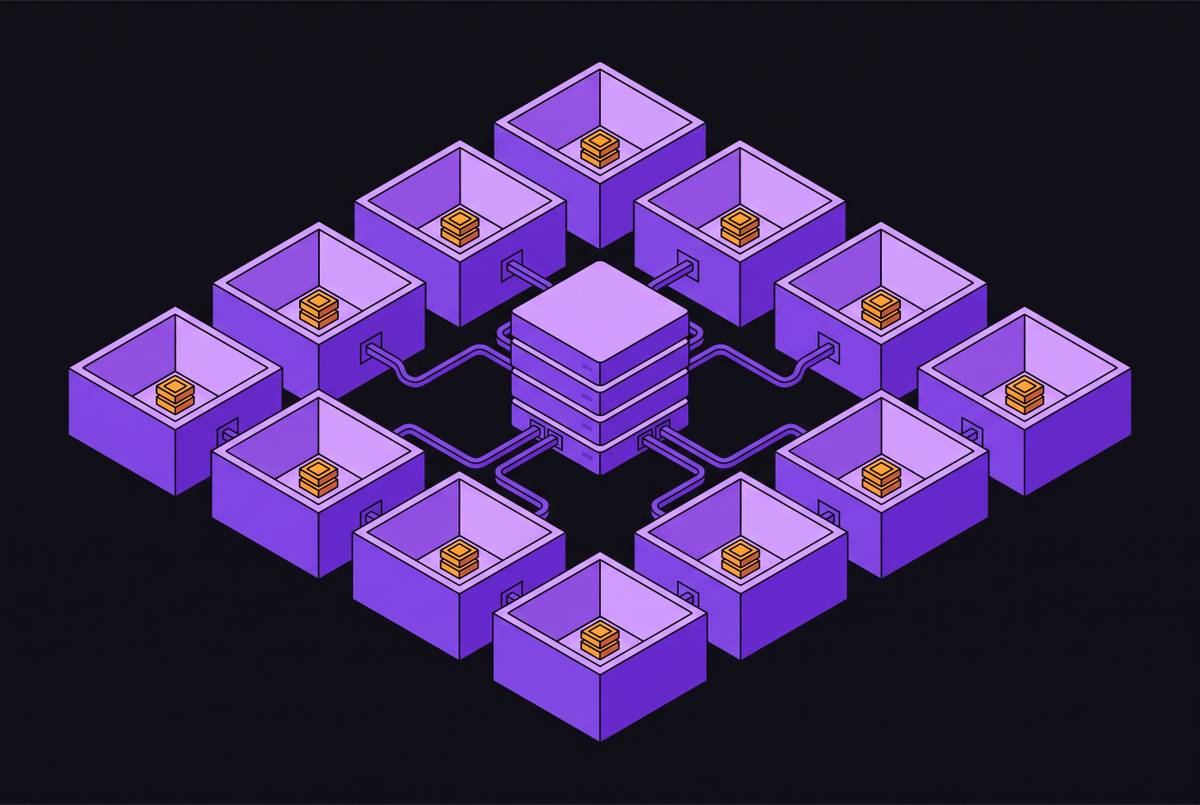
Persistence answers what survives, while isolation answers where the agent can act. An autonomous agent may be able to install packages, run shell commands, and hold credentials. Those abilities put other agents at risk when they share a process or container. For a per-user fleet, separation is also a correctness requirement because one user’s memory, credentials, and tool state must remain apart from another’s. Deployment establishes this boundary before the agent begins working.
Firecracker gives each workload its own guest kernel within a microVM. A guest-kernel exploit therefore does not, by itself, cross the hardware boundary into another agent’s environment. Firecracker can also boot and create many microVMs quickly, though a host can hold somewhat fewer of them than Docker containers at a similar cost per instance. Docker Sandboxes, which became generally available in September 2026, use a custom VMM distinct from Firecracker. Expose isolation through flags such as --sandbox=microvm and --sandbox=docker, making the execution boundary explicit at deployment.
How idle-cost economics should shape the deploy and sleep conventions the CLI exposes
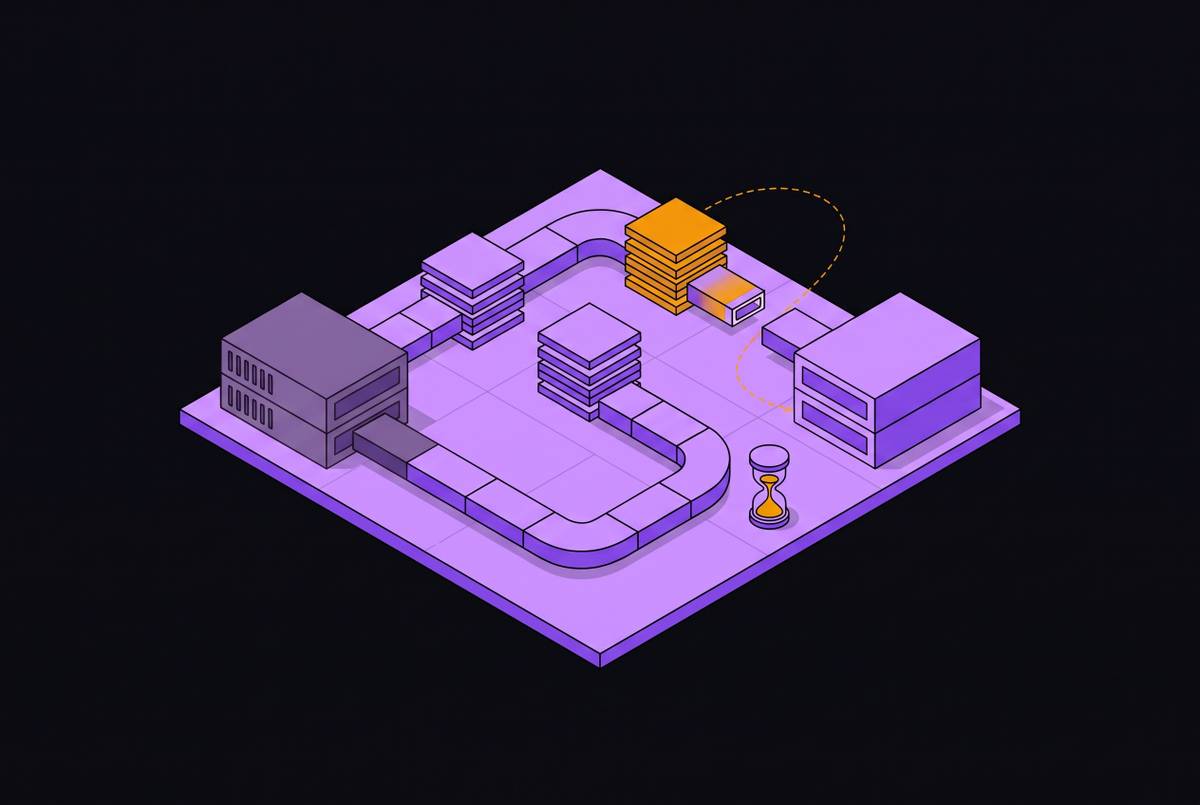
A developer deploying one agent per user across hundreds of users faces a different cost problem from running one shared agent. Most instances spend most of their time idle. Keeping each instance running ties compute spending to the size of the fleet, including instances with no active work. Snapshot-restore scheduling changes that relationship by moving idle memory and disk state into storage, which costs a fraction of maintaining a running instance. Fast restoration makes continuity possible without permanent execution.
Upstash Box illustrates this model through active-CPU billing and automatic pausing that preserves files on wake. AWS AgentCore Runtime V2, shipped September 18, 2026, starts new sessions from a snapshot of an initialized agent and reclaims memory the agent stops using during the session. For a self-hosted workflow, the corresponding CLI choices are --sleep-after, --snapshot-on-idle, and --wake-timeout. Without those controls, the interface has only running or stopped, so the team must pay for idle compute or manage pauses by hand.
CI/CD integration and the point where the CLI must produce machine-readable output
A repeatable deployment must work without a person interpreting its terminal output. Cline’s Headless CLI 2.0 makes the architectural choice to produce JSON and support pipe-and-chain patterns for CI/CD integration. A deployment command that works in a pipeline also takes configuration from environment variables without asking a person to answer interactive prompts, and returns exit codes that tell downstream steps what to do.
The workflow requires mcp-agent deploy to emit an endpoint and capability hash as JSON so a pipeline can verify the deployment, register its endpoint, and gate the merge without manual interpretation. Human approvals introduce another requirement because the CLI must express when to suspend, serialize state, and resume from a pipeline trigger. Durable execution provides the means to suspend and resume, and deployment policy sets how to use it. Registration with a tracing backend such as LangSmith or Langfuse also belongs in this workflow so that production failures are not left without tracing.
The operational debt that accumulates when CLI conventions are chosen carelessly
A shortcut becomes harder to reverse once other systems depend on it. Hardcoded secrets, disposable state, implicit isolation, and unstructured output become the de facto contract between the framework, infrastructure, and team. A scaffold that initially serves one agent requires manual adaptation as the fleet grows. Those adaptations become undocumented knowledge, until safe redeployment depends on consulting someone who remembers the original setup. The cost is not just extra work but a narrowing group of people able to operate the system.
Auditability exposes the same weakness from another direction. A regulated deployment must account for callable tools, credentials, and changes between versions, and reconstructing that record after deployment conventions have spread is expensive. Tool lifecycle changes add migration pressure as well. Continue.dev was acquired by Cursor, and Roo Code was archived in May 2026, leaving dependent teams to manage the consequences. Open source provides migration leverage only when deployment conventions make that migration tractable. The constructive inverse is a workflow with reproducible environments, auditable state, and machine-readable deployment results that can grow from one agent to one per user without architectural surgery.
Designing a CLI workflow that treats each agent as a persistent, isolated first-class service
The design task is to make service identity independent of whether compute is currently running. Each user’s agent needs its own disk, credentials, and memory, and the CLI must manage the whole fleet as well as launch individual processes. The recommended first-class controls are isolation level, persistence backend, sleep and wake policy, and output format. These controls define the service’s continuity and boundaries in the same place that defines its deployment. They are not optional operational details.
Snapshot-restore scheduling makes this model affordable when most agents are inactive, while VM-level isolation gives active agents room to operate without sharing another user’s environment. Choosing a framework or exposing an API endpoint alone gives the team neither of these properties. The CLI has to provision the boundary, connect durable state, and encode lifecycle policy as one reproducible path. The practical test is a single-push deployment from local code to a live endpoint, with one command and one configuration file expressing the production contract. If the team still has to handle persistence, isolation, or automation in a separate step by hand, the workflow still needs work.